Igbayilola
When School is the Only Safety Net
The more I am exposed to the realities of the girl child living in underserved communities in Nigeria, the more I understand that formal education is not a luxury. It is a lifeline.
Growing up, my parents were the hidden architects of my education. Their investment went far beyond paying school fees; they curated a world of learning outside the classroom. We read books beyond our curriculum, debated ideas at the dinner table, and had access to extra lessons at home. Education was not just something that happened to me at school. It was intentionally woven into the fabric of my daily life.
“Looking back, I realise that even if the classroom had been taken away, I would still have a solid base to build on.”
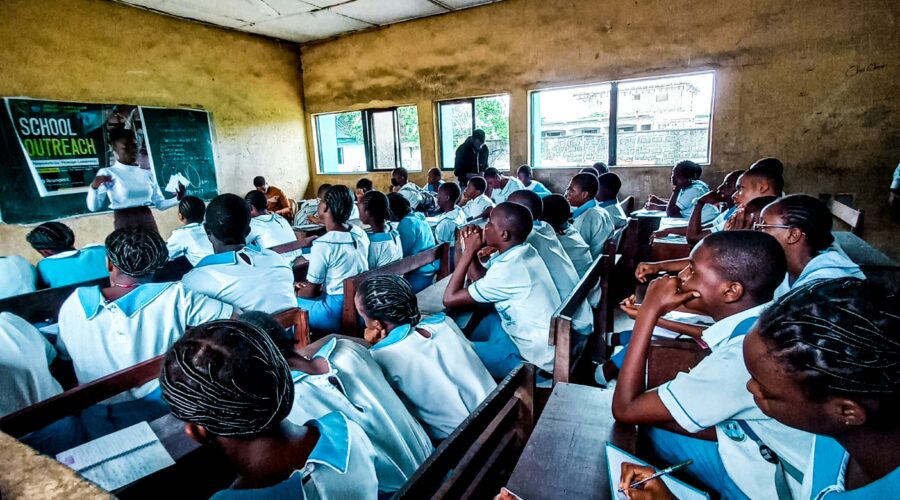
That, however, is not the reality for many girls across Nigeria. For them, there is no dinner table debate, no supplementary reading, no parent who can check their homework or explain what they did not understand in class. And when school is taken away, her only remaining teacher becomes circumstance.
The Invisible Support Gap
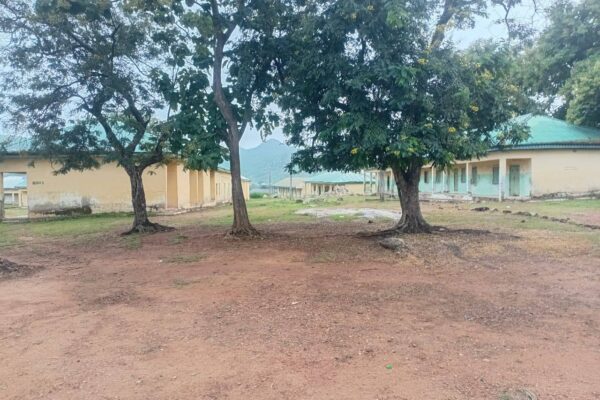
Consider a young girl in a rural community in Nasarawa State. Born to parents who may lack formal education themselves, she faces a support gap that is often invisible to the privileged. It is not that her parents do not care. They do, deeply. They simply lack the tools and exposure to reinforce her learning at home.
This gap is rarely acknowledged. We focus on enrolment numbers, on building classrooms, on getting girls through the school gate. But we rarely ask what happens when she gets home. For a child like her, school is not just one part of her education. It is all of it.
According to UNICEF, Nigeria accounts for approximately 15 percent of the world’s out-of-school children, with girls in rural and low income communities most affected. But even that statistic does not tell the full story. It only counts the girls who are not in school at all. It does not account for those who are present in body but falling behind because nothing at home reinforces what the classroom provides.
For these girls, structured formal education is non-negotiable. Without it, the gap between them and their more privileged peers does not just exist. It widens.
Education as Protection
This is why our national conversation must move beyond mere access. It is not enough to simply enrol a girl in school; we must ensure she receives an education that compensates for what she lacks at home.
That means well trained teachers who understand the communities they serve. It means schools that offer more than rote learning. Schools must build critical thinking, confidence, and the ability to navigate a world that was not designed with her in mind. It also means school feeding programmes that ensure hunger does not sit between her and concentration, and systems that keep her safe on the journey to and from school.
When a girl is denied this, she is not just missing class. She is being left vulnerable. Early marriage becomes more likely when she has nowhere else to go and no sense of a future worth waiting for. Poor health outcomes follow when she has not learned to advocate for her own body. Limited economic opportunity then carries across generations when she cannot read a contract, start a business, or support her own children differently than she was supported.
Formal education, in this sense, is not merely about academics; it is her pathway to opportunity and her chance to shape a future she was not born into.
We must treat formal education as essential infrastructure, as vital as roads or electricity, because for some children, school is one enriching layer in a life already full of support.
But for her, school is the whole structure. It is where she learns to read and write, and where she first encounters the idea that her mind matters. It is where the future, however uncertain, first becomes imaginable.
Photo by Dike Darion on Unsplash