Igbayilola
She was thirteen when she was withdrawn from school.
Fourteen when she was married.
Fifteen when she went into labour for the first time in a village in Niger State, where the nearest hospital was a two-hour journey on a road that became a muddy swamp during the rainy season.
Her name, for the purpose of this piece, is Fatima.
Fatima laboured for three consecutive days. There was no skilled midwife. There was no emergency care. There was only a community in which childbirth had always happened this way, and a young girl whose pelvis had not yet fully matured for the demands of childbirth.
The baby did not survive.
The prolonged pressure of labour had already caused further damage. Days later, the uncontrollable leakage of urine began. Within months, her husband had taken another wife. Within a year, she had been cast out of the life she had always known.
She spent the next four years in isolation, living with chronic pain and convinced she was under a curse. No one told her the condition had a medical name. No one in her community had ever heard of obstetric fistula, or knew that it could be treated.
Fatima is a composite character, but her story is a documented reality. She represents thousands of young women caught in the same devastating sequence: early marriage, geographic isolation, and a healthcare system that failed them at the moment they needed it.
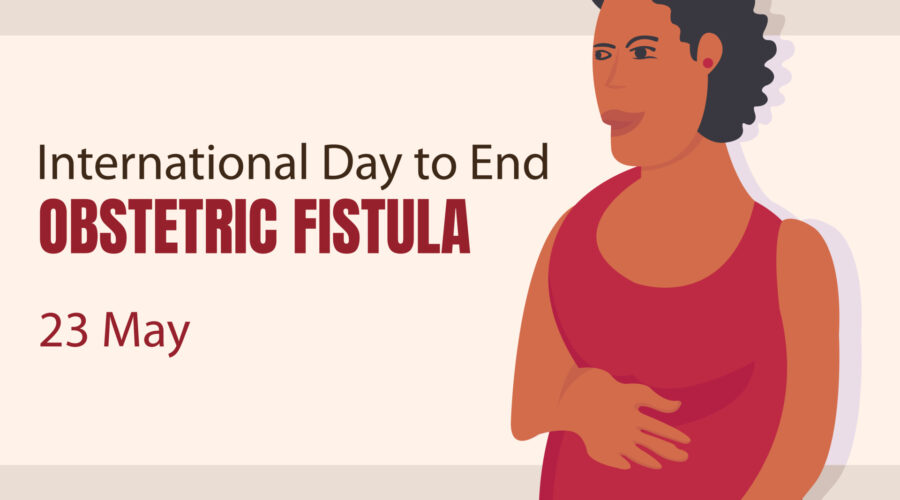
According to the United Nations Population Fund, roughly 12,000 Nigerian women develop obstetric fistula each year. Nigeria carries one of the highest burdens of this condition globally. As the world marks the International Day to End Obstetric Fistula on May 23, what Fatima’s story represents must be confronted: not isolated medical accidents, but systemic failures wearing human faces.
The Endpoint of a Chain of Failures
Fatima’s crisis did not begin in the labour room. It began the day she was taken out of school, deepened the day she was married before her body had finished growing, and was sealed the day she went into labour hours from a functioning hospital with no one qualified to help her.
Obstetric fistula occurs when prolonged obstructed labour without timely medical intervention creates an abnormal opening between the birth canal and the bladder or rectum, resulting in continuous, involuntary leakage of urine or faeces. It is both preventable and treatable. Yet it persists because it is the predictable endpoint of compounding failures. Child marriage forces underdeveloped bodies into high-risk pregnancies. Limited formal education leaves girls without the health literacy to advocate for themselves. Poverty turns the basic logistics of reaching healthcare into an insurmountable obstacle. And when women do attempt to seek help, they frequently encounter clinics that are understaffed, under-equipped, and hours away on bad roads.
The Silence That Keeps Women Trapped
Surgical repair is highly effective in uncomplicated cases, particularly when treatment is provided early. Across Nigeria, dedicated surgeons, nurses, and organisations are restoring dignity to survivors through repair surgeries and rehabilitation programmes. But the response remains far too small for the scale of the crisis.
Many women living with fistula are hidden in rural communities, unaware that treatment exists, or convinced their condition is spiritual rather than a treatable injury. Stigma does not just cause suffering. It prolongs it by ensuring women never reach the care that could end it.
What Must Change
Nigeria cannot end obstetric fistula through goodwill alone. It requires deliberate policy and sustained commitment.
- Fund Treatment Domestically: The Federal and State Ministries of Health must stop leaving fistula repair centres dependent on international donor funding. Treatment must become a permanent line in national health budgets.
- Equip Rural Infrastructure: Rural health centres must be equipped with consistent electricity, basic surgical capacity, and qualified midwives who are paid and supported to serve the communities that need them most.
- Enforce Legislative Shields: The Child Rights Act must move from paper to practice, with strict enforcement that protects young girls from early marriage.
- Engage Traditional Leadership: Traditional leaders, whose influence reaches places legislation never will, must name the stigma surrounding fistula and reject it openly.
A Different Kind of Ending
Fatima survived her labour. That should have been the beginning of her life. Instead it became the moment everything was taken from her: her health, her marriage, her place in her community, and four years of her life, lost not to fate but to failures that were entirely preventable.
The continued existence of obstetric fistula in Nigeria is not an inevitable reality. It is a record of preventable harm that continues because systems have not changed fast enough to stop it.
Fatima’s story belongs to a past we should have left behind decades ago. That it is still being lived out today, by thousands of girls, is a failure we cannot afford to ignore.
Featured Image Credit: Vector by Vecteezy